


Local SEO for General Contractors: How to Get Found When Homeowners Search

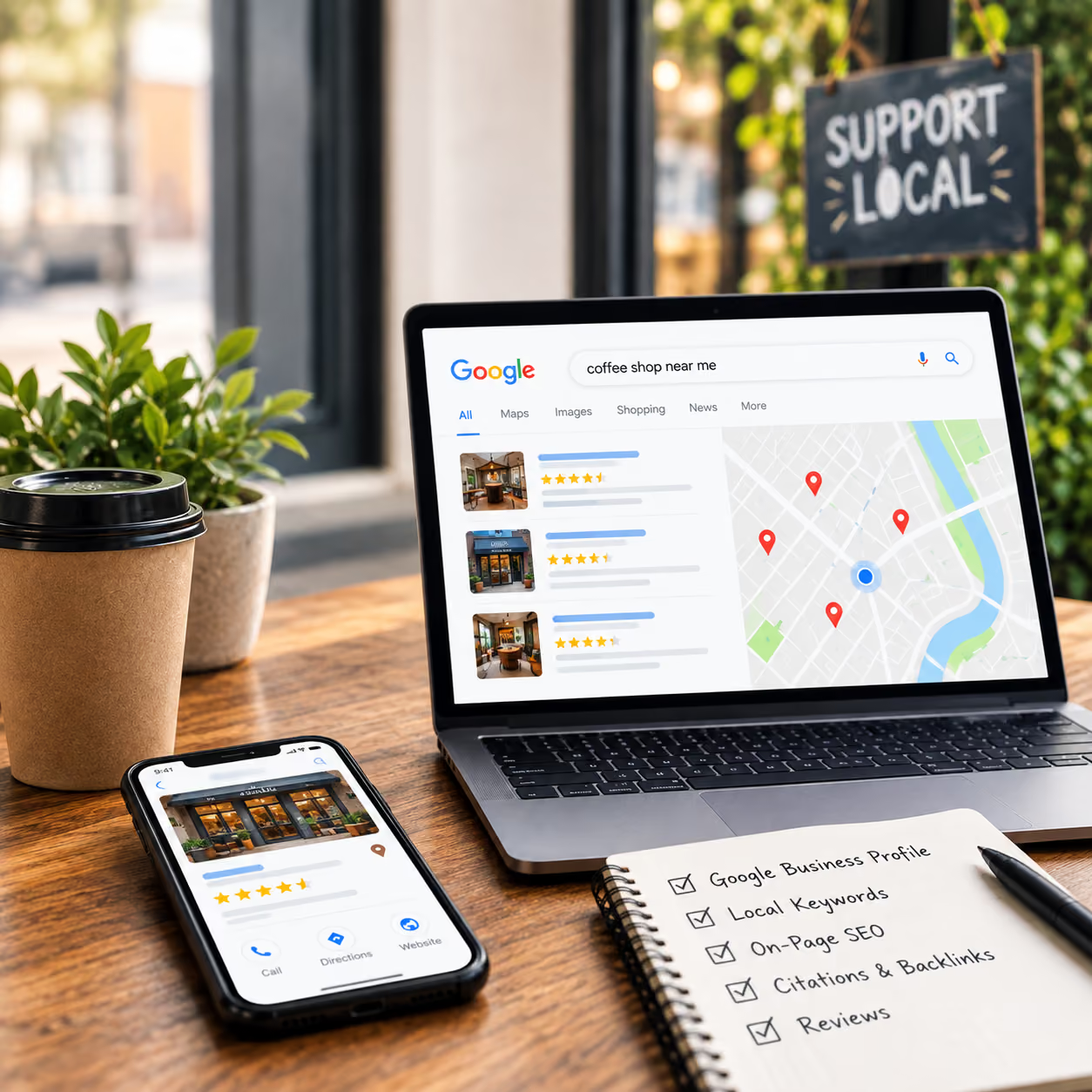
When a homeowner needs a kitchen remodel, a new deck, or an addition, one of the first things they do is search. "General contractor near me" and "kitchen remodeler in Newburyport" are exactly the kinds of searches where the contractors who show up first get the first call, and often the job.
For general contractors, local SEO is one of the most valuable marketing investments, because the jobs are large and the customers are nearby. This guide covers how to show up in Google Maps and local search, what to put on your website, and how to turn those searches into estimate requests.
Short on time? Here are the six priorities:
- Optimize your Google Business Profile with the right categories
- Build a separate page for each type of project you do
- Create pages for the towns you serve
- Show your work with real project photos and stories
- Make reviews a steady habit
- Respond to every lead quickly
How homeowners search for contractors
Homeowners rarely search for a company by name. They search by need and place: "bathroom remodel Amesbury," "custom home builder near me," "deck contractor Newbury MA." Google answers those searches with a map pack of three local businesses, followed by organic results. Local SEO is how you earn a place in both.
Because remodeling and building are high value, customers tend to research longer and compare more carefully than they would for a quick repair. That is good news for contractors who show up with a strong profile, real examples of their work, and reviews that back it up.
1. Optimize your Google Business Profile
Your Google Business Profile is the first impression for many homeowners. For a general contractor, a few details matter a lot:
- Choose the right primary category. If you are a general contractor, use that. If you specialize, such as in remodeling or roofing, choose the most specific primary category that fits and add secondary categories for related work.
- List your services individually, with short, clear descriptions
- Set your service area to the towns you actually work in, and hide your address if you do not meet customers at a storefront
- Upload real project photos regularly, including before and after shots
- Keep your business name accurate. Google's guidelines require the name to match your real world name, and adding extra keywords can get a profile suspended
For a full walkthrough, see our local SEO checklist for small businesses.
2. Build a page for each type of project
A single "Services" page that lists everything you do is one of the most common mistakes on contractor websites. Google ranks pages, not companies, so each major service needs its own page. Examples include:
- Kitchen remodeling
- Bathroom remodeling
- Home additions
- Custom home building
- Decks and outdoor living
- Whole home renovations
Each page should explain the process, the types of projects you handle, what homeowners can expect, and how to get started, along with photos from real jobs and a clear way to request an estimate. Aim for content that someone considering a big investment would actually find useful, not a few lines of generic text.
3. Create pages for the towns you serve
If you work across several towns, location pages help you show up for "contractor in [town]" searches. The key is making each one genuinely different. Mention projects you have done there, local details that homeowners care about, and the services you offer in that area. Copying one page and swapping the town name is a quick way to create thin content that does not rank.
If you are not sure which towns to prioritize, look at where your best past jobs came from, and start there.
4. Show your work
For contractors, proof is everything. A homeowner is about to trust you with their house, so the website should make that decision easier:
- A project gallery with real photos, organized by type of work
- Short project write ups: the goal, the challenge, and the result
- Descriptive alt text on every image, so search engines understand what is in the photo
- License and insurance information, visible near your call to action
- Before and after comparisons where possible
Project pages also give you natural places to mention the town, the type of work, and the details that match what people search for.
5. Make reviews a steady habit
Reviews affect both your ranking and whether a homeowner calls you. Ask every happy customer for a Google review right after the project is complete, make it easy with a direct link, and respond to every review you receive. Never buy reviews or offer rewards for them, since that goes against Google's rules. Show your best reviews on your website, next to your call to action, and on the service page they relate to.
6. Respond to every lead quickly
A contractor who answers quickly wins more estimates. Make sure your phone number works as a tap to call link, your contact form sends alerts to someone who will respond, and you have a plan for missed calls. Speed matters especially for paid leads, like those from Google Local Services Ads, where Google also tracks how quickly you respond.
Where paid ads fit in
Local SEO takes time. For contractors who want leads sooner, Local Services Ads can place your business at the top of search results, with payment tied to leads instead of clicks. Availability depends on your trade and location, so it is worth checking the fit. The two work well together: ads can bring in leads now, while SEO builds the visibility that keeps working over time.
Track what matters
Judge your SEO by the results that matter to your business: calls, estimate requests, and booked jobs. Each month, check your Google Business Profile insights, your Search Console data, and your call and form submissions. If you cannot tie your marketing to real inquiries, you are guessing.
Local SEO for general contractors FAQs
How long does local SEO take for a contractor?
Early movement can appear within the first few weeks, and meaningful results usually take three to six months. Competitive markets and newer websites can take longer, which is why many contractors pair SEO with ads.
Do I need a separate page for every service?
Yes, for the services that matter most to your business. Each page gives Google a clear match for a specific search and gives homeowners a page that speaks directly to their project.
Can I rank in towns where I do not have an office?
Often, yes. Contractors can rank in towns they serve by setting a service area, building real pages for those towns, and earning reviews from local customers. Proximity still matters on Google Maps, so the towns closest to you are usually the easiest to win first.
Are reviews really that important for contractors?
Very. For a high value project, homeowners look closely at reviews before calling. A steady stream of recent, detailed reviews builds trust and helps your ranking.
Want help getting found?
Seven12 Digital helps local businesses, including contractors and home builders, get found on Google and turn searches into calls. If you would like an honest look at how your website and profile are performing, book a free call. You can also read about our local SEO services, or see what to look for in an SEO company in Newburyport, MA.